The Synapse — How Neurons Talk
The surprising gap between neurons, and the chemical messengers that cross it.
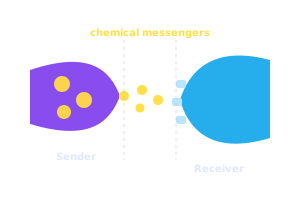
Here's the surprise: neurons mostly don't touch. Between one neuron's axon and the next neuron's dendrite is a microscopic gap called the synapse. When the electrical spike reaches the end of the axon, it can't jump the gap directly — so it's converted into a chemical message.
The sending neuron releases neurotransmitters, chemical messengers that drift across the gap and land on the receiving neuron. Some neurotransmitters excite the next neuron (push it toward firing); others inhibit it (calm it down). The brain therefore speaks two languages at once — electrical within a neuron, chemical between neurons — and this chemical step is exactly where mood, learning and many medicines act.
- Neurons are separated by a tiny gap — the synapse.
- Signals cross it as chemicals (neurotransmitters), not electricity.
- Neurotransmitters can either excite or inhibit the next neuron.
- The brain is electrical within cells, chemical between them — and this is where many drugs act.
Try the full interactive course — free
Read the lessons here, or take the same course as interactive, gamified lessons in the app. Free account, your progress saved.
Start the interactive course →Free educational content. ManaSaya is a learning platform, not a medical or clinical service.