How Neurons Fire — The Electrical Signal
The action potential: how a neuron creates an all-or-nothing electrical spike.
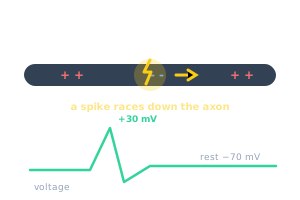
At rest, a neuron holds a small negative voltage across its membrane, like a tiny charged battery. When enough input arrives and pushes that voltage past a threshold, the neuron fires an action potential — a fast electrical spike that shoots down the axon.
The spike is all-or-nothing: it either happens at full strength or not at all, so the brain can't code a stronger signal with a bigger spike. Instead it codes intensity by frequency — fire faster for a stronger signal. And because the spike regenerates itself as it travels, it arrives at the far end of a long axon just as strong as it started, never fading out.
- A resting neuron sits at a small negative voltage.
- Crossing a threshold triggers an action potential.
- The spike is all-or-nothing — same size every time.
- Intensity is coded by firing rate, not spike size; the signal never fades along the axon.
Try the full interactive course — free
Read the lessons here, or take the same course as interactive, gamified lessons in the app. Free account, your progress saved.
Start the interactive course →Free educational content. ManaSaya is a learning platform, not a medical or clinical service.