The Map of the Brain — Regions & Lobes
Putting it together: the major regions and what each one does.
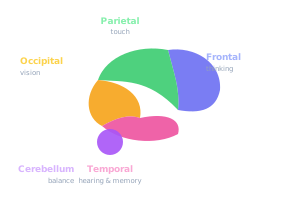
The wrinkled outer layer, the cerebral cortex, is split into four lobes, each with broad specialities: the frontal lobe (planning, decisions, focus and personality), the parietal lobe (touch and spatial sense), the temporal lobe (hearing, language and memory), and the occipital lobe (vision). Beneath the cortex sit older structures — including the hippocampus and amygdala you've already met — and the cerebellum at the back, which coordinates movement and balance.
But the map can mislead if taken too literally. Almost nothing the brain does lives in a single spot; reading, remembering or feeling all light up networks spread across regions working together. The lobes are a useful guide to where certain functions concentrate, not a set of isolated boxes — which brings the whole course full circle to the brain as one deeply interconnected system.
- The cortex has four lobes: frontal, parietal, temporal, occipital.
- Frontal = planning/focus, parietal = touch/space, temporal = hearing/language/memory, occipital = vision.
- The cerebellum coordinates movement and balance.
- Real functions use networks across regions — not single isolated spots.
Try the full interactive course — free
Read the lessons here, or take the same course as interactive, gamified lessons in the app. Free account, your progress saved.
Start the interactive course →Free educational content. ManaSaya is a learning platform, not a medical or clinical service.