Memory — How You Store the Past
The brain's two-stage memory system, and why sleep helps it stick.
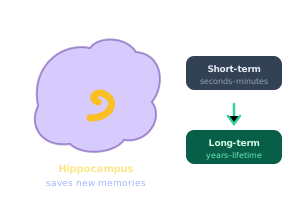
Memory isn't one thing. Short-term (working) memory holds a small amount of information for seconds — a phone number, the start of this sentence — and its capacity is famously limited. Long-term memory stores far more, far longer, but information has to be transferred and consolidated to get there. A small structure called the hippocampus is central to forming new long-term memories.
Memory is also not a perfect recording. Each time you recall something you partly rebuild it, which is why memories drift and can be distorted. Two things make memories stick: spaced repetition (revisiting material across days rather than cramming) and sleep, during which the brain replays and consolidates the day's experiences. Study with the grain of the system, not against it.
- Working memory is small and brief; long-term memory is vast and durable.
- The hippocampus is key to forming new long-term memories.
- Recall rebuilds a memory — it isn't a perfect playback.
- Spacing and sleep are what make memories stick.
Try the full interactive course — free
Read the lessons here, or take the same course as interactive, gamified lessons in the app. Free account, your progress saved.
Start the interactive course →Free educational content. ManaSaya is a learning platform, not a medical or clinical service.